User Experience · Spatial Interaction Design
My Role: Concept Development, Strategist, AI-Assisted Visual Design, User Research
Team Members: Concept Developer – Mackenzie Chen, Model Developer – KY, Researcher – John Liu & Micky Fang
September 2025 – December 2025
Project Overview
According to our survey, 80% of Bay Area residents have been to the SF Centre Mall, yet 88% of them rarely visit anymore. This shows that while awareness is high, local engagement has significantly declined. Most residents no longer see the mall as part of their daily lives.
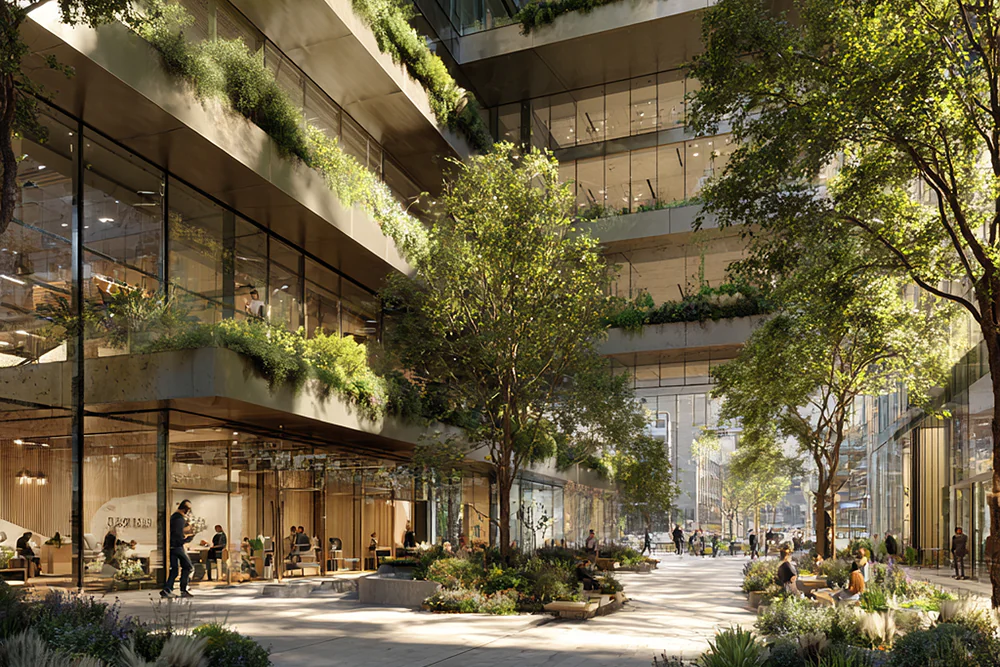
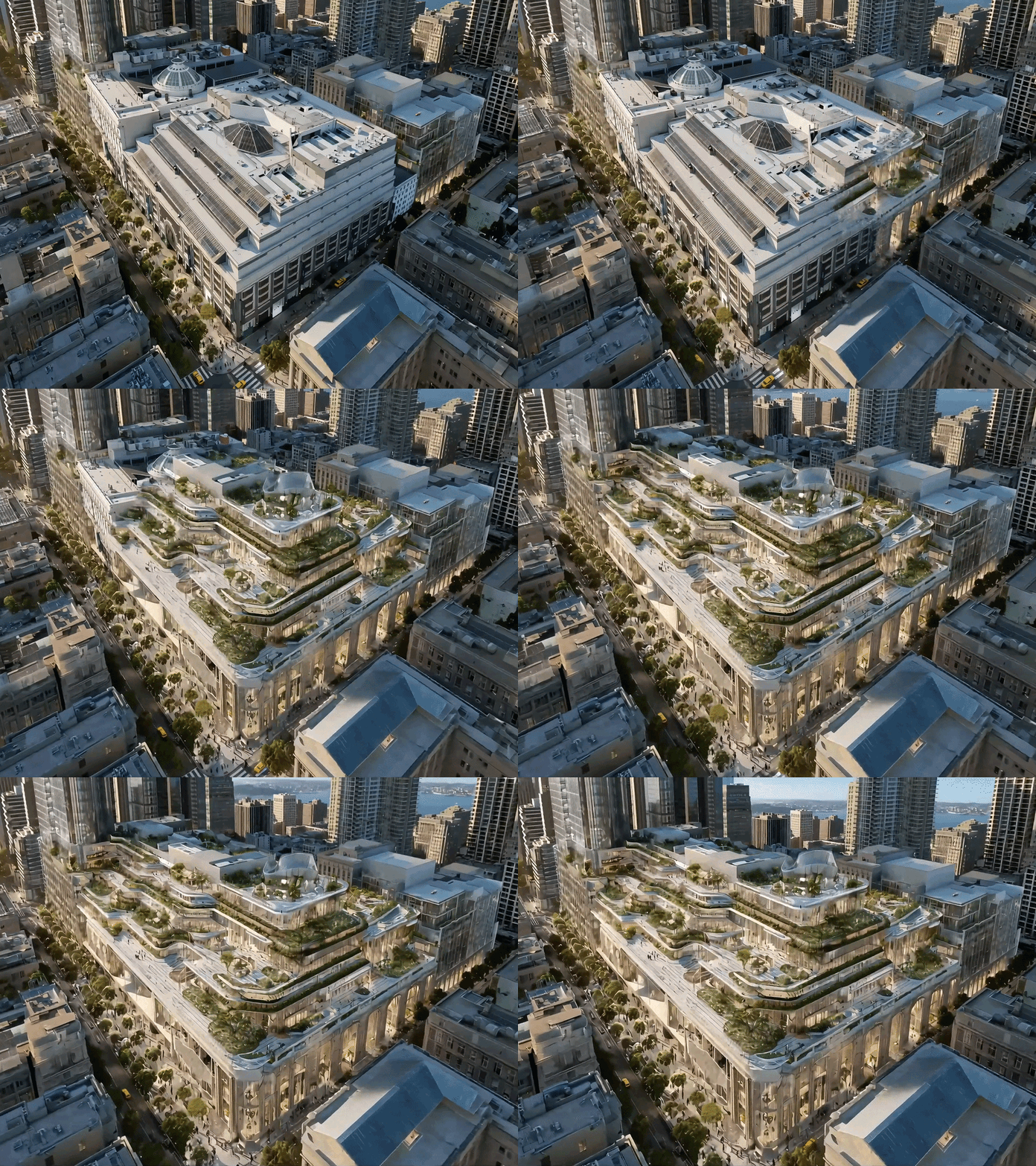
Our concept is called The Living Hub. At its core, The Living Hub transforms SF Centre Mall into a multi-purpose green destination where daily life, local culture, food, art, technology, and wellness come together in a nature-oriented environment supported by our Climate & Wellness System. The project blends active programs with a continuous layer of California native plants and environmental data visualization, turning the building itself into a place where visitors can physically and emotionally recover while staying fully connected to urban life.
Our Responsibilities
- Transforming San Francisco’s current urban policies into spatial and experiential design strategies
- Integrating indoor green spaces and experiences to promote public health and well-being
- Exploring a balance between environmental health and commercial and recreational activities through spatial circulation and interactive design
- Positioning the San Francisco Centre mall redevelopment project as a forward-thinking and policy-compliant urban experience system
Problem Area
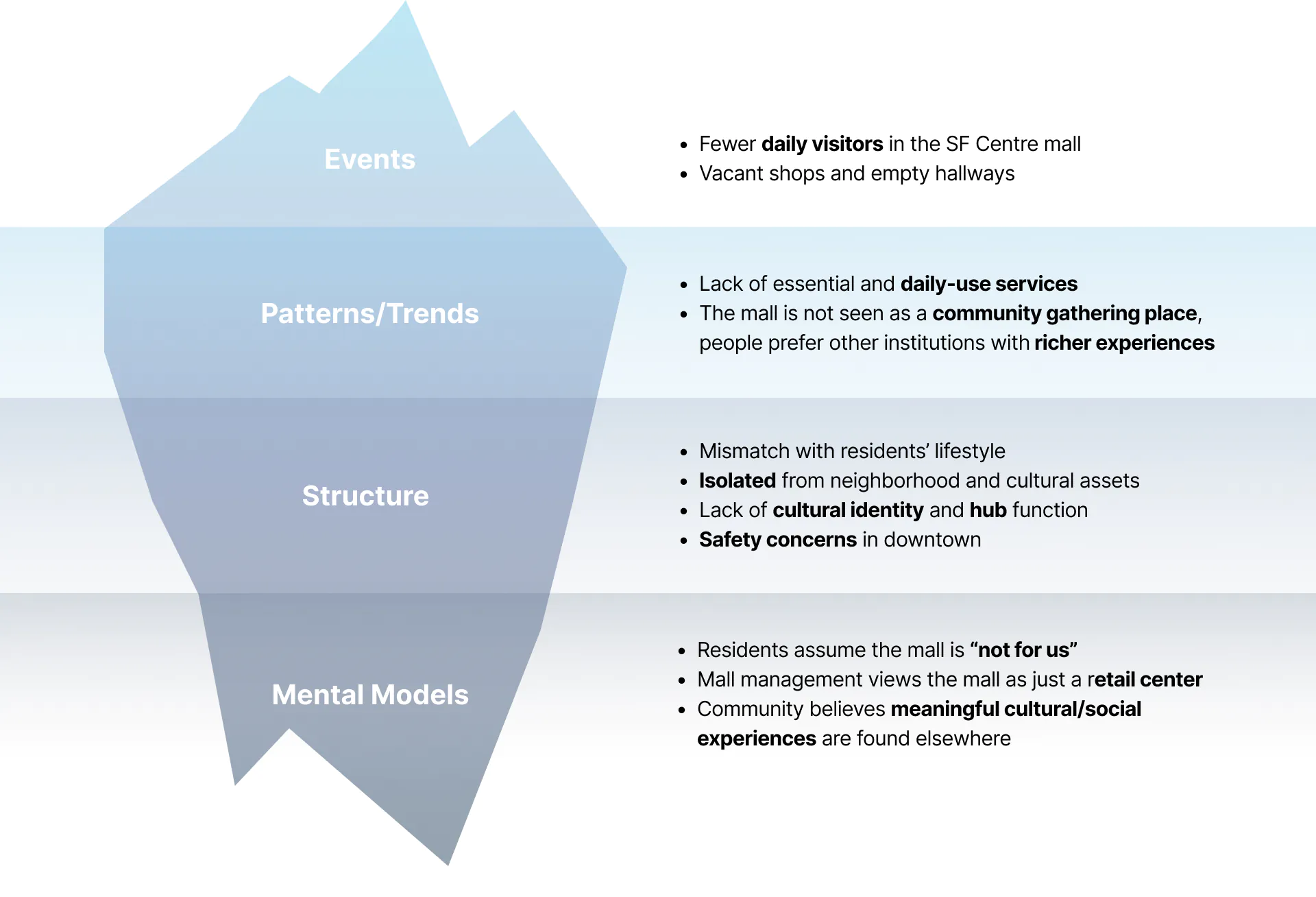
- Lack of Essential Services: The mall has no attractive restaurants, shops, or leisure spaces that encourage residents to gather.
- Lack of Community Connection: The mall is isolated from its surrounding neighborhood and nearby cultural institutions, making it irrelevant to residents and not perceived as a natural gathering place.
- Lack of Cultural Identity and Hub Function: The mall does not function as a safe, locally rooted cultural hub where food, art, and community spaces come together, leaving it disconnected from diverse residents.
- Mismatch with Residents’ Lifestyle: The mall is positioned mainly as a shopping center, but people want more than just a shopping mall, they need cultural, social, and everyday experiences beyond retail.
- Safety Concerns in Downtown: Crime and homelessness around the mall create discomfort and discourage residents from visiting.
- Declining Foot Traffic: People avoid the mall due to lack of services, poor positioning, and safety concerns, leading to fewer daily visitors.
User Research
We did street interviews with mall visitors in both SF Centre Mall and Stonestown, mostly residents in San Francisco. At the same time sending out survey to gather more insights.
- The research revealed that Bay Area residents place high importance on safety and cleanliness when deciding whether to visit downtown areas. Many specifically mentioned that the streets around SF Centre Mall feel dirty and unpleasant, which discourages visits.
- Almost all the participants emphasized food as a decisive factor for visiting a mall. They are willing to travel specifically for high-quality dining experiences, especially restaurants that are both delicious and aesthetically appealing.
- Many participants agreed that it does not need to remain a traditional shopping mall, but could be reimagined as a multi-functional hub—for example, combining co-working spaces, gyms, and diverse dining options. At the same time, people are aware of the mall’s ownership changes and are curious about its future direction, which adds to the sense of anticipation.
- Higher-income and middle-class shoppers increasingly prefer suburban malls, which are perceived as safer, cleaner, and offering richer experiences with convenient transportation access. This trend creates further challenges for downtown malls like SF Centre.
Concept Breakdown
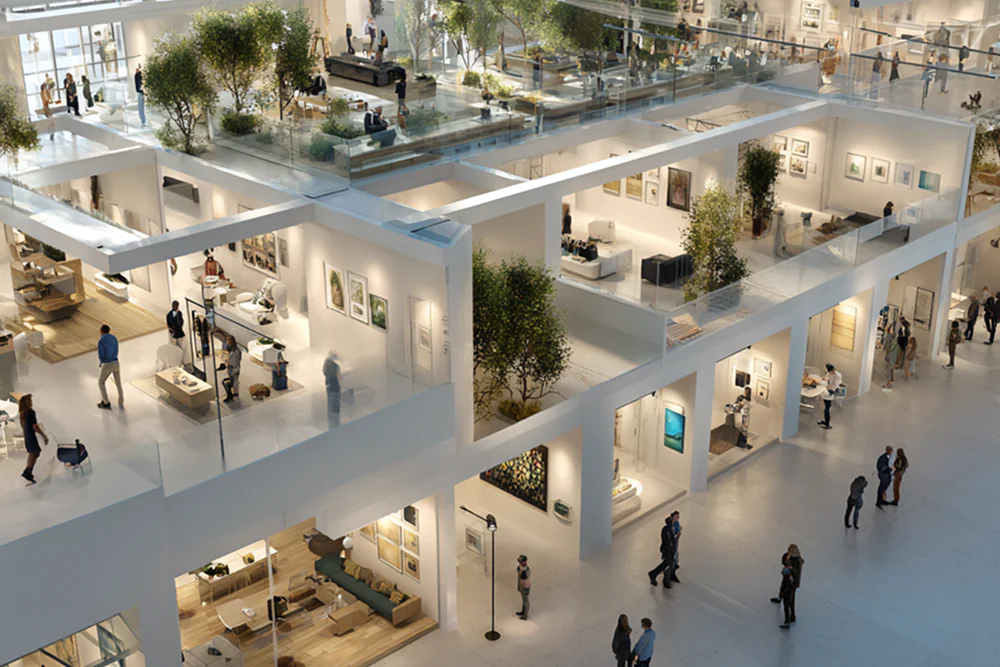
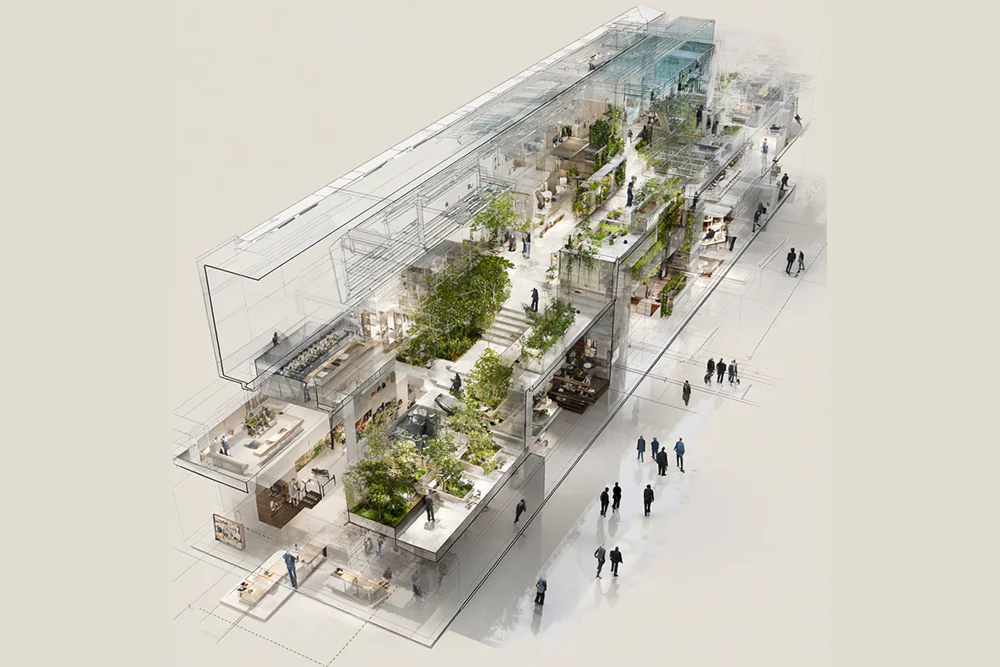
Top Floor: Art & Tech Zone (Ticketed), Outdoor Event Space
- Leverage SF’s strong tech atmosphere and nearby big tech presence to host art/tech conferences, installations, and startup demos. Collaborate with local tech event organizers (e.g., SF Tech Week, Design Week) to turn the mall into a creative hub. The extended outdoor area will provide people with a comfortable and refreshing green space for rest and social interaction.
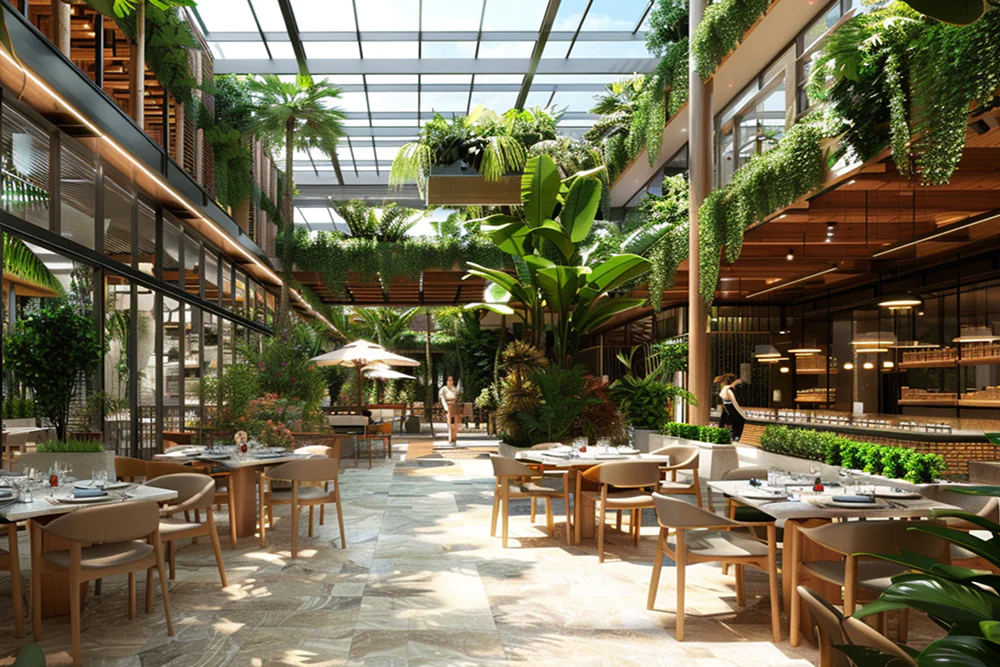
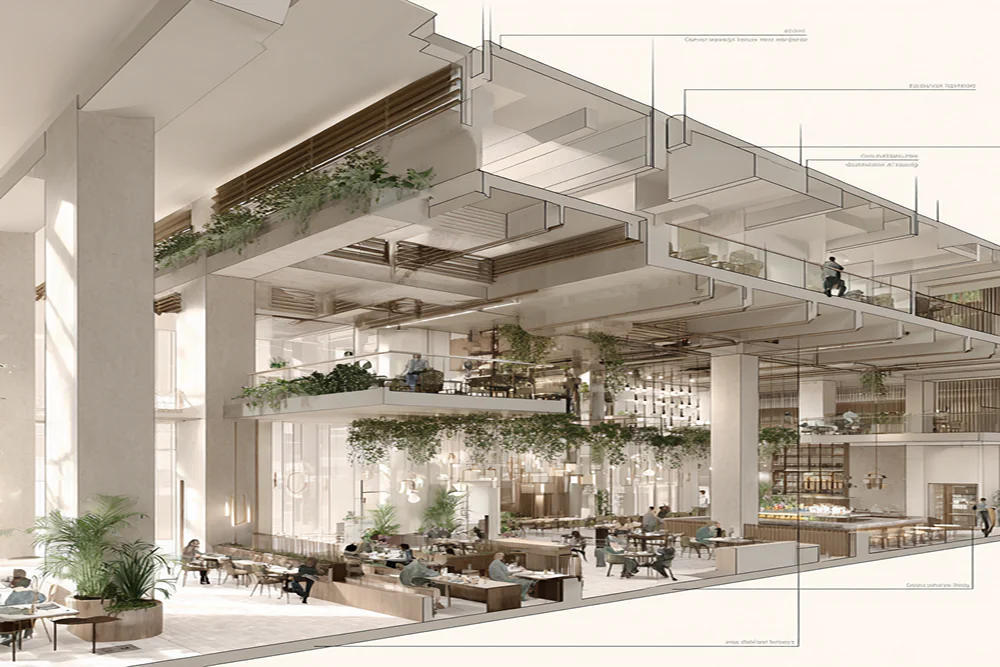
Second & Third Floors: Trendy Garden Dining & TikTok Hotspots
- Bring in trending indoor garden restaurants and use TikTok and Instagram promotions with influencers to attract residents and visitors. Invite creators to film and share their dining experiences, turning SF Centre into a viral local hotspot.
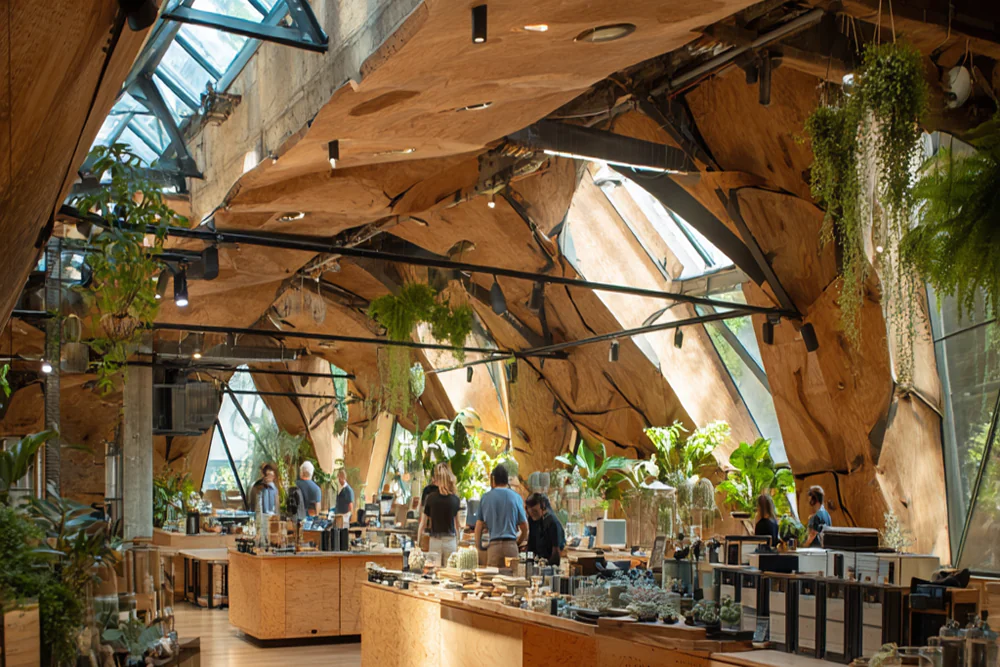
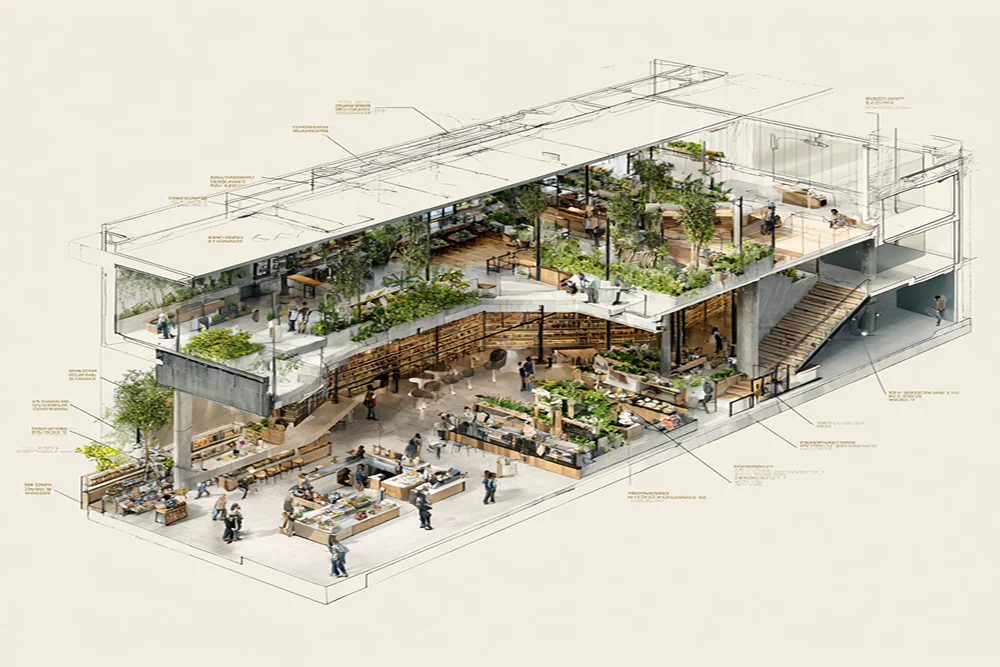
First Floor & Basement: Local Market Street & Maker Workshops
- A hands-on marketplace offering fresh, farm-to-farm products and sustainable goods, including eco-tech products, miniature bee ecosystems (with close-up access, honey collection, and observation), plant care products, 3D-printed coral reefs, and DIY labs for upcycling crafts.
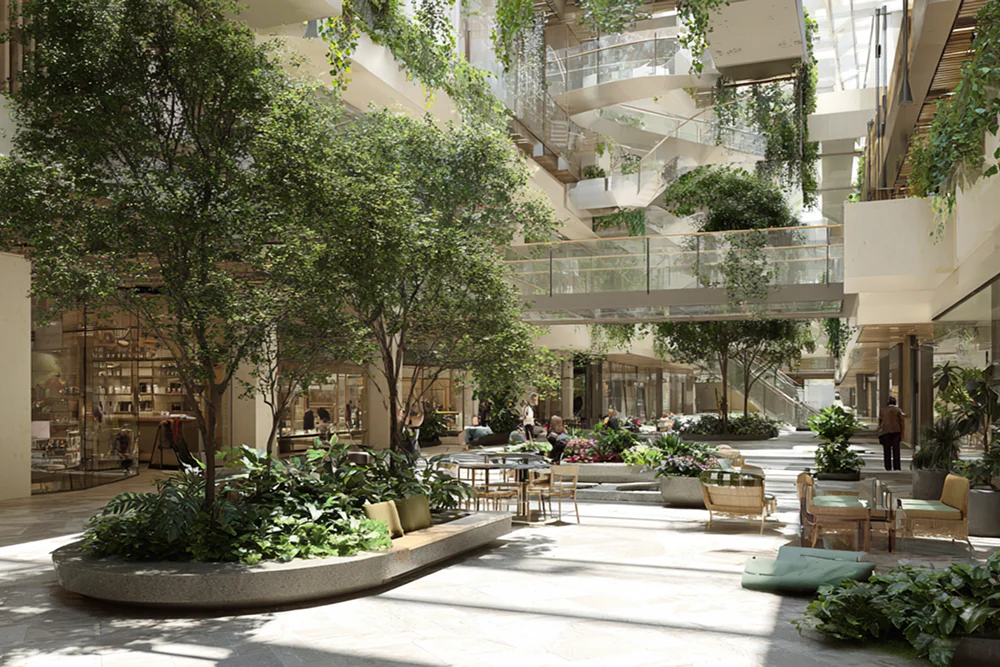
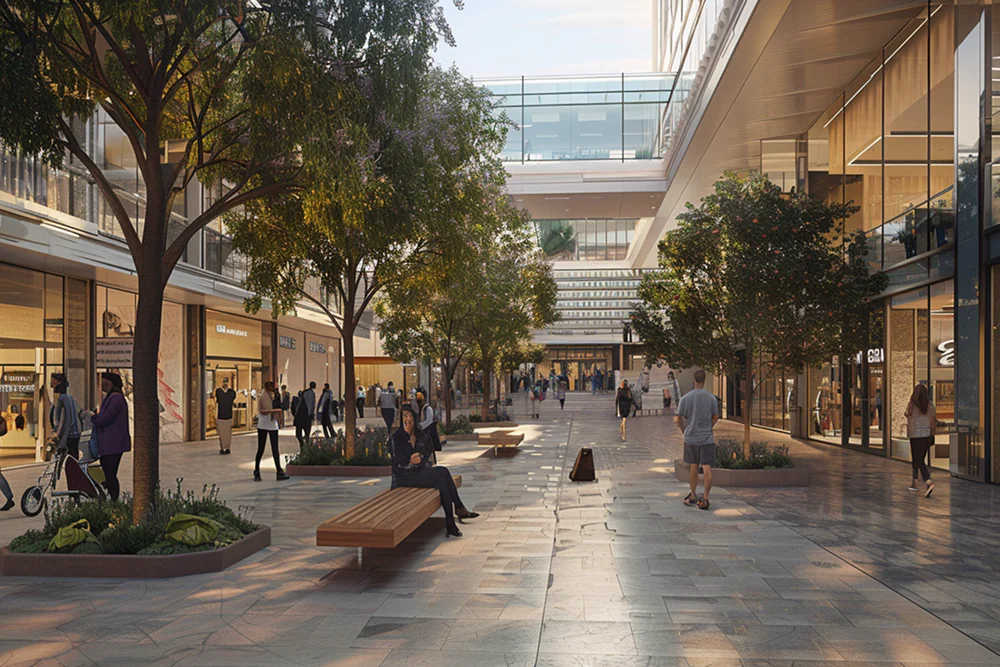
Public Spaces: Green, Natural, and Restful
- Redesign open areas with plants, natural materials, and comfortable seating to make the mall feel more welcoming, a place where nearby workers and residents can relax, not just shop. This is not just for the residents, it is also part of the government’s recent strong support for the project of bringing greenery into SF. The building will have an area with seasonal plants, allowing San Francisco residents to experience greenery in the downtown area.
Climate Wellness System
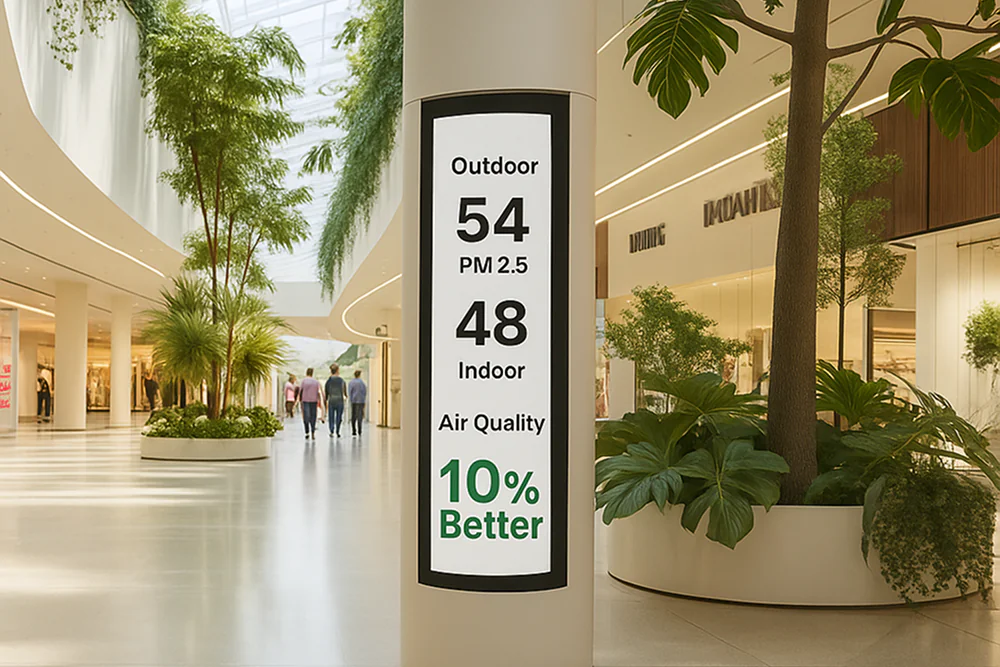
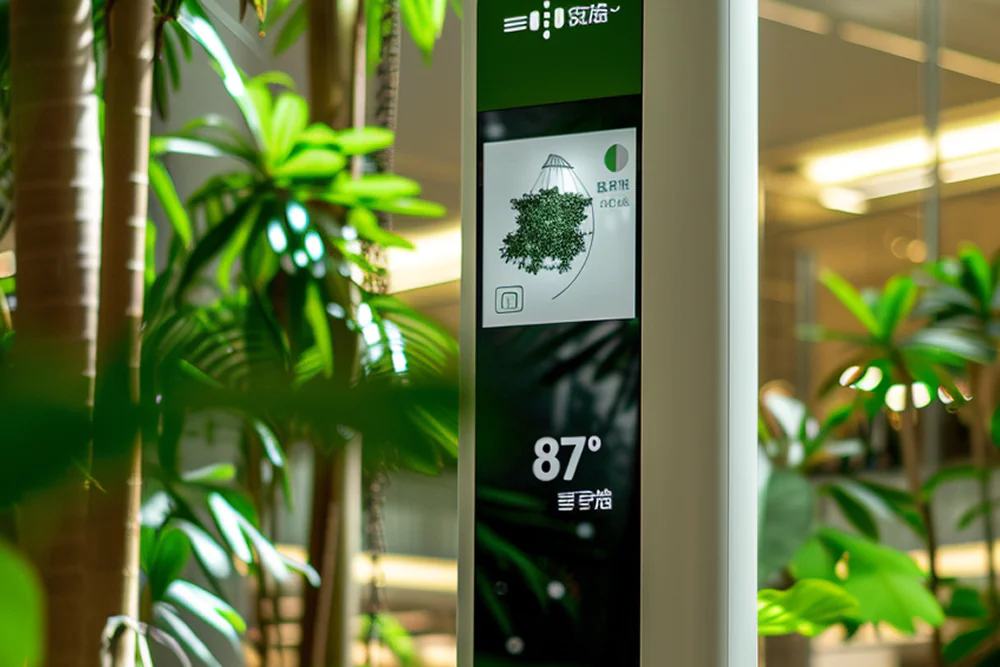
- The Climate & Wellness System (which is called CAC) and Green Network is the backbone of our system. Through the integration of California native plants, environmental sensors, and real-time digital displays, CAC, improves indoor air quality and comfort, makes environmental performance visible to visitors, and reinforces trust in the building as a truly health-oriented space. rather than treating greenery as decoration, we treat it as infrastructure, in order to support emotional comfort, longer dwell time, and repeat visitation.
Service Structure
The system relies on collaborations with local vendors, local farms, tech event organizers, and internet influencers. Different floor operations follow flexible leasing models — from short-term pop-up markets to event ticketing and restaurant partnerships. A unified digital management platform coordinates bookings, promotions, and data insights, ensuring smooth flow and engagement across all experiences in the mall.
The service structure is designed to encourage cross-floor engagement — visitors move naturally from one experience to another.

Walk-through Storyboard
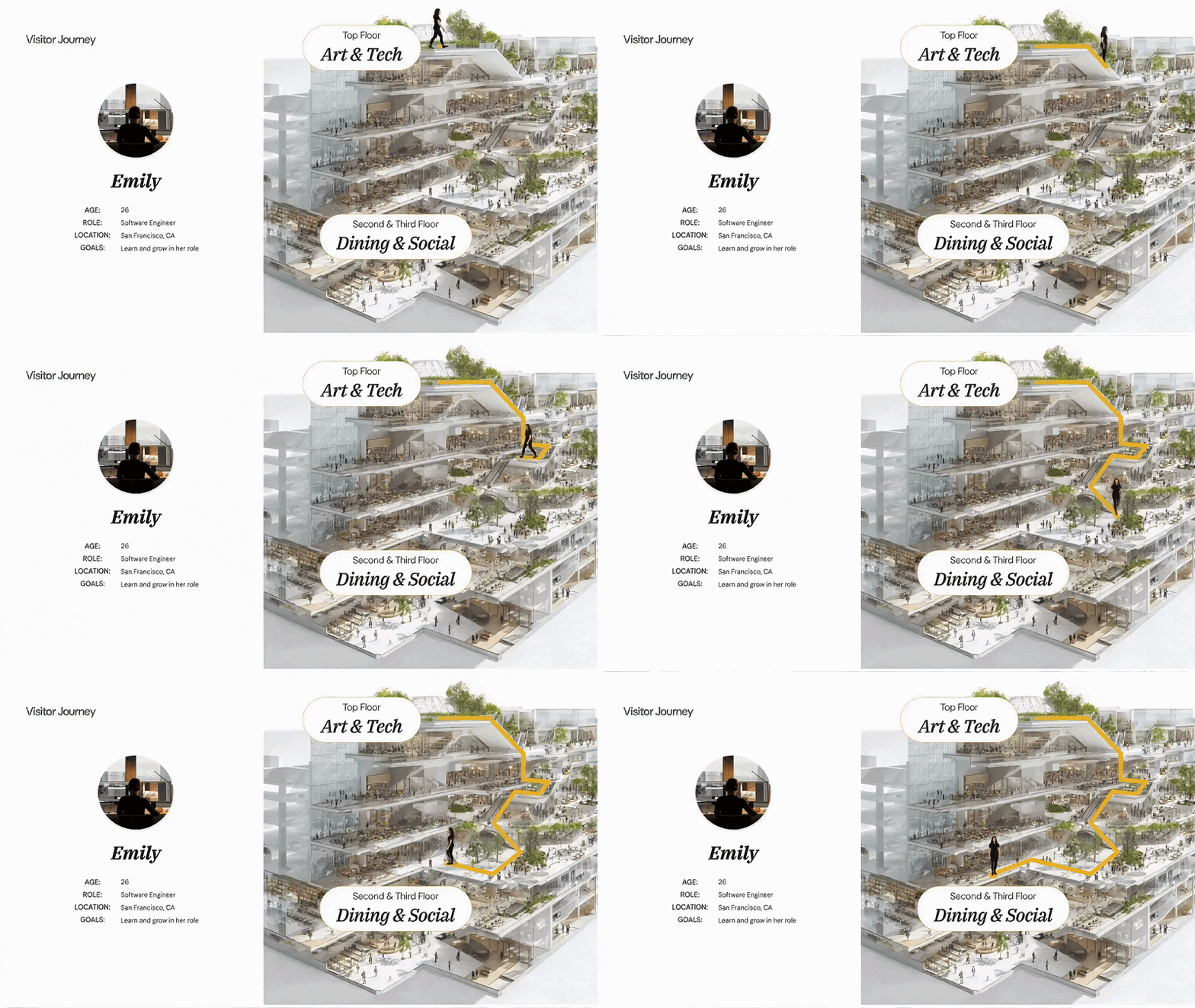
Emily is a San Francisco resident coming downtown to attend a tech networking event.
She enters The Living Hub and moves directly to the top-level Art & Tech Zone. Here, she encounters exhibitions, workshops, and the networking event itself, all of them set within a relaxing greenery-filled environment that contrasts with her typical work surroundings.
Outside the main event space, she discovers several interactive installations, including casual play areas where she joins others for a game of ping-pong and ends up meeting new people.
After the event, instead of leaving immediately, she naturally flows downward into the Dining & Social Zone, where she enjoys dinner with the friends she just made.
And on her way out, she notices large digital screens displaying real-time air-quality data, showing that conditions inside the building have improved by about 5% compared to the surrounding area.
Seeing this not only reassures her but also strengthens her sense of environmental awareness and trust in the space.
What began as a single-purpose visit becomes a multi-layered experience, extending her stay and deepening her engagement with the mall.
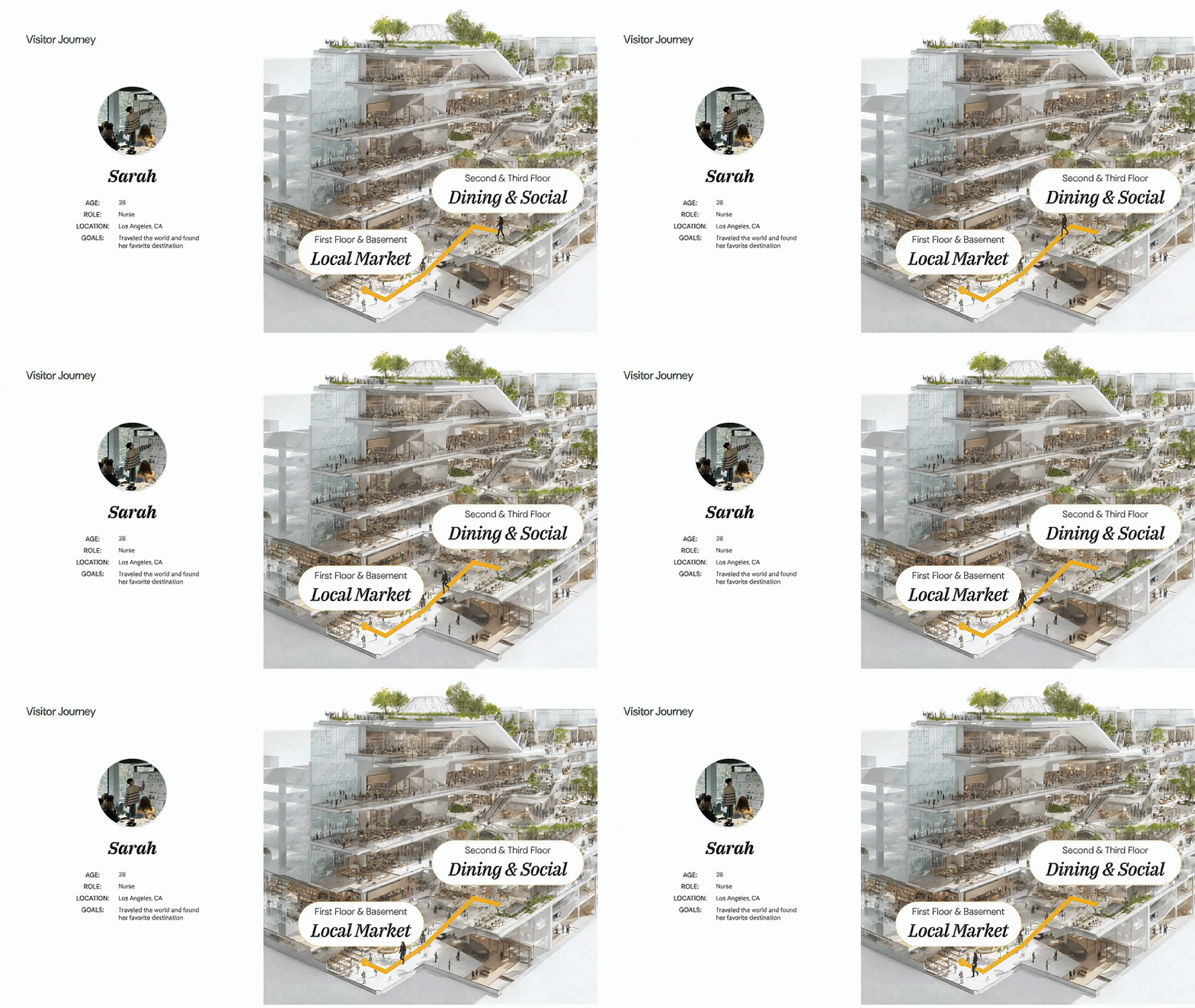
Sarah first discovers The Living Hub on TikTok. She sees videos of a trending restaurant surrounded by plants and natural lighting, and she decides to check it out.
After exploring Union Square, she walks along Market Street and gradually notices the streetscape changing—the environment becomes greener and more vibrant.
Then she spots a striking building where the indoor greenery is visible even from outside, bathed in sunlight.
She realizes: this is The Living Hub—the place she saw online.
So she enters the building and goes straight to the Dining & Social Zone on the second and third floor, which she finds most intriguing. And she is lucky to walk in and find a seat, giving her time to observe the space, lush plants around every corner and a chic, modern design atmosphere. She takes photos, enjoys her meal, and shares her experience on social media.
After dining, Sarah’s exploration continues downward into the Local Market Zone, where she discovers handcrafted goods and pop-up stores that showcase local culture. So she purchases handmade items as gifts for family and friends.
Again, a single motivation turns into a cross-floor journey, supported by continuous greenery and a comfortable environmental atmosphere.
Concept Validation
We interviewed 3 SF residents, 2 tourists, and 2 architecture professionals (Craig Scott & Jeffrey E. Miller) to validate our concepts. They all agreed that the current downtown environment was fine, but they preferred a greener, more relaxing place. Our project’s theme perfectly aligned with their needs.